
Top 5 Best Sushi Knives 2026
If you’ve ever struggled to achieve that razor‑thin, feather‑light cut on a piece of nigiri, you know the right knife can be a game‑changer. From traditional Japanese craftsmanship to modern, high‑tech alloys, the perfect sushi knife balances sharpness, balance, and elegance, making every slice feel effortless. In this guide we’ve hand‑picked the five best sushi knives
5. HOSHANHO YANAGIBA Sushi Knife 10

The HOSHANHO 10‑inch Yanagiba is a true specialist’s tool, forged from high‑carbon 10Cr15CoMoV super steel and wrapped in eight layers of composite steel for unrivaled durability. Its flat, double‑bevel blade is hand‑polished to a razor‑thin 12‑15° edge on each side, delivering a Rockwell hardness of 60 ± 2 HRC – the sweet spot for slicing sashimi and sushi into feather‑light, uniform pieces without bruising the flesh.
The traditional Japanese octagonal handle blends rich rosewood with copper wire inlays, offering a secure, ergonomic grip that reduces fatigue during long prep sessions. While the knife shines on delicate fish, it also handles softer foods such as tofu, soft cheeses, and rolled sushi, making it a versatile addition for both home cooks and professional chefs.
Pros
- Exceptional sharpness & edge retention – 12‑15° hand‑polished edge and 60 HRC hardness keep the blade cutting cleanly for years.
- Premium construction – 10Cr15CoMoV core with 8‑layer composite steel provides strength, corrosion resistance, and a beautiful finish.
- Ergonomic octagonal handle – Rosewood with copper wire delivers a comfortable, non‑slip grip for precise control.
Cons
- Weight – The dense steel and solid handle add heft, which may feel heavy for users accustomed to lighter knives.
- Maintenance – High‑carbon steel requires regular cleaning and occasional oiling to prevent staining and maintain optimal performance.
4. SHAN ZU 10 Inch Japanese Sushi Knife

The SHAN ZU 10‑inch Japanese sushi knife blends traditional craftsmanship with modern performance. Its 9‑layer forged structure combines a high‑carbon 10Cr15MoV steel core hardened to 62 HRC with outer layers that boost durability, resist corrosion, and prevent chipping. The blade’s 12° angle and refined matte finish give it a razor‑sharp edge that slices through fish, vegetables, and delicate ingredients with almost no resistance, while the matte surface keeps fingerprints and food residue at bay.
The octagonal red sandalwood handle isn’t just striking, it’s ergonomically shaped to fit the hand comfortably, reducing fatigue during long prep sessions and offering precise control for the classic yanagiba motion. Packaged in a luxurious gift box, this knife makes an impressive present for chefs, culinary students, or anyone who loves sushi at home.
Pros
- Exceptional edge retention from the 9‑layer, high‑carbon steel core (62 HRC).
- Comfortable, balanced grip thanks to the ergonomic octagonal sandalwood handle.
- Low‑maintenance matte blade that stays cleaner longer and resists fingerprints.
Cons
- The 10‑inch length may be too long for very small cutting boards or novice users.
- Requires regular honing to maintain the ultra‑fine 12° edge for optimal performance.
3. SHAN ZU 10 Inch Sushi Knife

The SHAN ZU 10‑inch Sushi Knife blends traditional Japanese craftsmanship with modern performance. Its 57 HRC high‑carbon stainless steel blade resists rust and holds an ultra‑sharp 12° edge on both sides, making clean, precise cuts through sashimi, fish fillets, and even thick steaks. The octagonal red sandalwood handle, paired with a full‑tang construction, delivers a balanced feel that stays comfortable in hand during long prep sessions. Packaged in an elegant gift box, this knife is ready to become a kitchen centerpiece or a thoughtful present for culinary enthusiasts.
Pros
- Exceptional sharpness & durability – 5Cr15Mov steel with a 12° double‑bevel edge stays razor‑sharp through heavy use.
- Ergonomic, sturdy handle – Octagonal red sandalwood provides a secure grip and reduces fatigue.
- Versatile kitchen tool – Ideal for sushi, fish filleting, and slicing larger cuts of meat.
Cons
- Requires proper maintenance – To preserve the edge and prevent corrosion, regular honing and gentle hand‑washing are recommended.
- Slightly heavier than thin fillet knives – The full‑tang design adds weight, which may feel bulky for ultra‑light slicing tasks.
2. KYOKU Samurai Series 10.5″ Yanagiba Knife
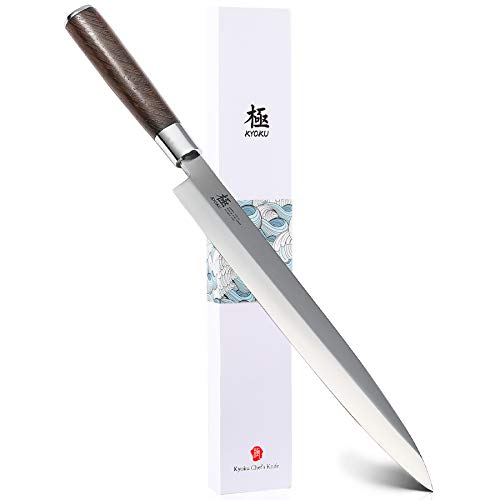
The KYOKU Samurai Series Yanagiba knife is a master‑crafted 10.5‑inch Japanese sushi and sashimi blade that blends traditional artistry with modern metallurgy. Its ultra‑sharp, cobalt‑added steel core is cryogenically treated and hardened to an HRC 56‑58, delivering unrivaled edge retention and a razor‑thin 11‑13° single‑side bevel. Hand‑polished to a mirror finish, the blade slices through fish and meat with buttery precision while maintaining flexibility and corrosion resistance.
A striking wenge wood handle not only adds an authentic, elegant look but also provides a balanced, ergonomic grip that reduces fatigue during long prep sessions. The knife arrives with a protective sheath and a sturdy case, keeping the blade safe, clean, and ready for display or transport.
Pros
- Superior steel performance – Cryogenic treatment and cobalt alloy give exceptional sharpness and long‑lasting edge retention.
- Ergonomic balance – The wenge handle offers a comfortable, fatigue‑free grip, ideal for repetitive slicing.
- Ready for travel – Included sheath and hard‑case protect the blade and make storage or transport effortless.
Cons
- High hardness – The HRC 56‑58 steel, while durable, can be more challenging to sharpen without proper tools or expertise.
- Specialized use – Its single‑bevel design excels at sushi and sashimi but may be less versatile for everyday Western kitchen tasks.
1. Shun Premier Chef’s Knife 8

The Shun Premier Chef’s Knife 8” blends traditional Japanese craftsmanship with modern performance, making it the go‑to tool for every kitchen task. Its wide, curved blade lets you rock through herbs and spices for a fine mince while keeping your knuckles clear of the board, perfect for slicing fruit, chopping vegetables, or carving meat. The core is Shun’s proprietary VG‑MAX steel, wrapped in 68 layers of stainless Damascus that are hammered with a TUSCHIME finish, delivering a razor‑sharp edge that stays sharp longer and resists corrosion and staining. The walnut‑finished, contoured Pakkawood handle feels dry and secure, even when your hands are wet, giving you precise control and a comfortable grip during long prep sessions. Hand‑crafted by skilled artisans, each knife carries the heritage of ancient Japan, offering both beauty and durability that will improves any culinary workspace.
Pros
- Versatile, all‑purpose blade – wide, curved belly handles everything from delicate herbs to robust meats.
- Superb edge retention – VG‑MAX core with 68‑layer Damascus provides lasting sharpness and corrosion resistance.
- Ergonomic, moisture‑resistant handle – walnut‑finished Pakkawood offers comfort and control for extended use.
Cons
- Premium price point – the handcrafted quality and materials come with a higher cost than standard chef’s knives.
- Requires careful maintenance – to preserve the Damascus pattern and edge, hand washing and prompt drying are recommended.
Frequently Asked Questions
What characteristics should I look for in the best sushi knife?
- Blade material: High‑carbon steel (e.g., VG‑10, Blue Steel) holds a razor‑sharp edge and is easy to sharpen, but requires proper care to prevent rust.
- Blade length: Traditional sushi knives range from 150 mm (Yanagiba) to 210 mm. A 180 mm blade is a versatile choice for most home chefs.
- Blade shape: A single‑bevel (kataba) edge gives the cleanest cuts for raw fish, while a double‑bevel (ryoba) is more forgiving for beginners.
- Handle: A wooden (magnolia) or composite handle provides a comfortable grip and balances the weight of the blade.
- Weight & balance: A well‑balanced knife feels light in the hand and allows smooth, controlled slicing motions.
How often should I sharpen my sushi knife, and what’s the best method?
- Frequency: Sharpen when the edge no longer slices through fish with a single, clean stroke, typically every 6–12 months for home use, more often if the knife sees heavy daily use.
- Method:
1. Japanese water stone (whetstone): Use a coarse grit (1000–1500) to set the edge, then finish with a finer grit (3000–8000) for a polished bevel.
2. Guided sharpening systems: Good for beginners; they maintain a consistent angle (usually 15°) and reduce the risk of over‑sharpening.
3. Professional services: If you’re unsure, a skilled sharpening shop can restore the knife without removing excessive metal. - Tip: Always sharpen on a flat, stable surface, keep the stone wet, and maintain the same angle throughout the process.
Can I use a sushi knife for other kitchen tasks, or should I reserve it solely for sushi?
- Primary purpose: A
Conclusion
Choosing the right sushi knife is ultimately about balancing precision, comfort, and durability to enhance every slice, whether you’re a seasoned chef or a home enthusiast. A well‑crafted blade that retains sharpness, a handle that feels secure in your hand, and a design that respects traditional Japanese aesthetics will improve your technique and the presentation of your rolls. Investing in quality materials and thoughtful construction pays dividends in consistency and confidence at the cutting board. By focusing on these core attributes, you’ll find a knife that not only meets the demands of sushi preparation but also becomes a trusted tool for years to come.