
Best Gluten Free All Purpose Flour: 6 Blends Ranked 2026
The best gluten free all purpose flour swaps in 1:1 for regular wheat flour in your favorite recipes without a gritty texture, a beany aftertaste, or baked goods that crumble apart. I bake for a gluten-free family member, and my first cheap blend turned cookies into sandy pucks, so I learned fast that the blend matters more than anything. The choice comes down to a few things: whether it’s a true 1:1 cup-for-cup substitute, whether it includes xanthan gum for structure, how neutral it tastes, and whether it’s made in a dedicated gluten-free facility for those with celiac disease. We ranked six gluten free all purpose flours on taste, baking results, and value. Here’s the one to buy.
What to Look for in the Best Gluten Free All Purpose Flour
Four things separate a great gluten-free flour from a disappointing one:
- True 1:1 substitution. A cup-for-cup blend replaces wheat flour by the same measure in most recipes, so you don’t have to reformulate. This is the easiest path for everyday baking.
- Xanthan gum or not. Blends with xanthan gum add the structure and chew that gluten normally provides; blends without it give scratch bakers control to add their own.
- Neutral taste and smooth texture. Blends built on white rice or a mix that avoids gritty brown rice taste cleaner and feel lighter, without a beany or sandy note.
- Certified and dedicated facility. For celiac disease, look for GFCO certification and a dedicated gluten-free facility. Pair your baking with our best kitchen scale for baking for accuracy.
I keep our best cooling rack and best flour storage container guides handy for the same kind of buyer.
1. Bob’s Red Mill Gluten Free 1-to-1 Baking Flour

This is the gluten-free flour I’d recommend to most people. Bob’s Red Mill expertly crafted a one-to-one blend of gluten-free flours, starches, and xanthan gum, so you can swap it straight into your existing recipes without hunting down specialty ingredients. It’s tested and confirmed gluten-free in a 100% dedicated gluten-free facility, so it’s safe for those with celiac disease, and Bob’s has been a trusted leader in natural foods since 1978. Because the xanthan gum is already in the blend, cookies, cakes, and quick breads come out with proper structure. That reliable 1:1 formula with xanthan built in is what makes it the safe default. This 4-pack of 22-ounce bags keeps you stocked. For dependable everyday gluten-free baking, I think it’s the clear starting point.
Pros:
– True 1:1 wheat flour swap
– Xanthan gum already included
– Made in a dedicated GF facility
– Trusted since 1978
– Handy 4-pack
Cons:
– Not ideal if you prefer no xanthan
– Best for non-yeast baking
2. Cup4Cup Multipurpose Gluten Free Flour

For the most neutral flavor, Cup4Cup is my pick. It’s billed as the original gluten-free flour and the first one-to-one substitution for all-purpose flour, developed in a professional kitchen. Its standout is a neutral flavor: unlike most gluten-free flours, Cup4Cup won’t change the taste of your favorite recipes, so cookies and cakes taste like the originals. It’s a 1:1 substitution, certified gluten-free, dairy-free, non-GMO, certified Kosher, and made in the USA. That clean, neutral taste in a true 1:1 blend is the draw for anyone who’s been put off by beany or gritty flours. It sits at a fair mid price for a 2-pound bag. If flavor is your priority, this is the one I’d choose. It genuinely tastes closest to regular flour of any blend here.
Pros:
– Neutral flavor, tastes like the original
– True 1:1 substitution
– Dairy-free and non-GMO
– Certified gluten-free and Kosher
– Chef-developed blend
Cons:
– Pricier per pound than value blends
– Smaller 2-pound bag
3. King Arthur Measure for Measure Gluten-Free Flour

For the best value 1:1 blend, King Arthur Measure for Measure is my pick. It’s a perfect 1:1 substitute for wheat flour in non-yeasted recipes, ideal for gluten-free cookies, cakes, and muffins, and it’s nutrient-fortified with iron, calcium, and vitamin B so you don’t miss the nutrients of enriched wheat flour. It’s Non-GMO Project Verified, Certified Gluten-Free by the GFCO, and Kosher certified, backed by King Arthur’s long baking reputation. It comes in a resealable 3-pound bag for freshness. That fortified, certified 1:1 blend from a trusted baking name at a low price is the appeal. It sits at a budget price. If you want a dependable everyday 1:1 flour without paying premium, this is the one I’d choose. King Arthur’s baking pedigree shows in the results.
Pros:
– True 1:1 substitute
– Fortified with iron, calcium, and B vitamins
– Non-GMO and GFCO certified
– Trusted King Arthur name
– Resealable 3-pound bag
Cons:
– Made for non-yeasted recipes
– Contains xanthan for structure
4. gfJules Gluten-Free All Purpose Flour

For breads and yeast baking, gfJules is my pick. It measures cup for cup in regular flour recipes, so cakes, cookies, and everything else swap easily, and its smooth white blend leaves out brown rice flour, so there’s no gritty feel or taste and the results are lighter. The real standout is versatility with yeasted baking: the blend handles breads and bakery recipes from rolls and buns to rustic loaves, sourdough, and even pasta, which many 1:1 blends struggle with. It’s made in a dedicated gluten-free facility and carries GFCO, OU Kosher, and vegan certifications. That smooth, grit-free blend that actually works for bread is the draw. It’s the priciest option here, in a large 72-ounce pouch. If you bake gluten-free bread, this is the one I’d choose. The lack of brown rice really does improve the texture.
Pros:
– Smooth, grit-free white blend
– Works for breads and yeast baking
– True cup-for-cup swap
– Dedicated GF facility
– GFCO, Kosher, and vegan certified
Cons:
– Most expensive on the list
– Overkill if you only bake cookies
5. Premium Gold Gluten Free All Purpose Flour
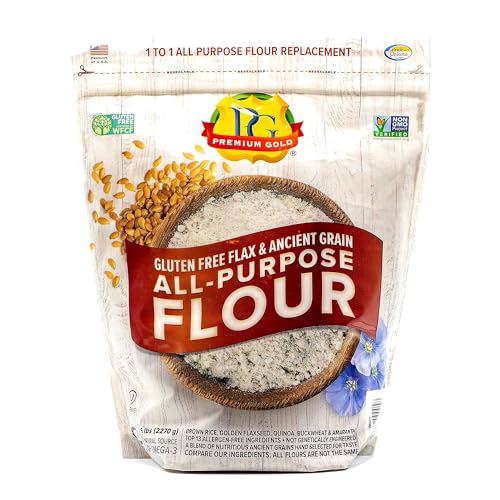
For added nutrition, Premium Gold is my pick. It’s an award-winning 1:1 all-purpose and whole-wheat flour replacement, and its standout is the nutrition profile: 12 grams of whole grains and 1200mg of omega-3 per serving, more than a typical white gluten-free blend. It’s farm-to-table and a product of the USA, 100% natural, gluten and allergen free, Kosher, with no preservatives, additives, or genetic engineering. That whole-grain, omega-3 boost in a 1:1 blend is the draw for anyone who wants their gluten-free baking to carry more nutrition. It sits at a fair price for a 5-pound bag. If you want a heartier, more nutritious blend, this is the one I’d choose. The whole grains add a pleasant depth to heartier bakes.
Pros:
– 12g whole grains per serving
– 1200mg omega-3 per serving
– 1:1 all-purpose replacement
– Product of the USA, all natural
– Large 5-pound bag
Cons:
– Heartier taste than white blends
– Whole grains suit some recipes better
6. King Arthur Gluten-Free All-Purpose Flour (No Xanthan)

The King Arthur All-Purpose blend rounds out the list for scratch bakers. It’s a carefully tested blend of white rice flour and whole-grain rice flour that’s ideal across gluten-free recipes, and crucially it’s made without xanthan gum, so it’s the choice of scratch bakers who prefer to add their own binder to control texture. It’s non-dairy and non-GMO, Non-GMO Project Verified, and Certified Gluten-Free by the GFCO, from the 100% employee-owned, founding B Corporation King Arthur. That xanthan-free flexibility for experienced bakers at a low price is the appeal. It comes in a 24-ounce bag at a budget price. If you like to formulate your own recipes and add binder to taste, this is the one I’d choose. Leaving out the xanthan gives you full control over the crumb.
Pros:
– Made without xanthan gum
– White and whole-grain rice blend
– Non-GMO and GFCO certified
– Great for scratch bakers
– Trusted King Arthur brand
Cons:
– Not a 1:1 swap without added binder
– Needs recipe know-how
Which Gluten Free Flour Should You Buy?
| If you… | Then choose |
|---|---|
| Want the best all-around 1:1 blend | Bob’s Red Mill (#1) |
| Want the most neutral flavor | Cup4Cup (#2) |
| Want the best value 1:1 | King Arthur Measure for Measure (#3) |
| Want to bake bread and yeast recipes | gfJules (#4) |
| Want more whole-grain nutrition | Premium Gold (#5) |
| Want to add your own binder | King Arthur All-Purpose (#6) |
For most people I’d start with Bob’s Red Mill 1-to-1 at #1: a true cup-for-cup swap with xanthan built in, made in a dedicated gluten-free facility, from a trusted name. Want the cleanest flavor, bread-friendly results, or extra nutrition? Cup4Cup, gfJules, and Premium Gold cover those. Whichever you pick, if you have celiac disease, choose a blend made in a dedicated gluten-free facility. For accurate baking, see our best kitchen scale for baking and best mixing bowls guides.
Frequently Asked Questions
Can you substitute gluten free flour 1:1 for regular flour?
With a blend labeled a 1:1 or cup-for-cup substitute, yes, you can swap it by the same measure in most non-yeasted recipes like cookies, cakes, and muffins. These blends include starches and usually xanthan gum to mimic gluten’s structure. Single gluten-free flours, like plain rice or almond flour, are not 1:1 and need recipe adjustments.
What is the difference between gluten free flours with and without xanthan gum?
Xanthan gum replaces the binding and stretch that gluten provides, giving baked goods structure so they don’t crumble. Blends with xanthan are true 1:1 swaps for most recipes. Blends without it let scratch bakers add their own binder to control texture, which is preferred by experienced bakers but requires more recipe know-how.
Is gluten free flour safe for people with celiac disease?
It is when it’s certified gluten-free and, ideally, made in a dedicated gluten-free facility, which prevents cross-contamination with wheat. Look for GFCO certification on the package. Several blends on this list, like Bob’s Red Mill and gfJules, are made in dedicated facilities. If you have celiac disease, always check the label and follow your own medical guidance.
Why do gluten free baked goods sometimes taste gritty?
Grittiness usually comes from blends built heavily on brown rice flour, which has a coarser texture. Blends that use white rice flour or a finer mix, like Cup4Cup and gfJules, avoid that sandy feel and taste. Letting the batter rest for a few minutes before baking also helps the flour hydrate and smooth out.
Last updated: August 17, 2026. Product availability re-checked.
This page contains affiliate links. As an Amazon Associate we earn from qualifying purchases, at no extra cost to you.