Best Manual Meat Grinder: 5 Hand-Crank Picks for 2026
The best manual meat grinder is a heavy-duty stainless steel hand-crank model with a solid clamp, because grinding your own meat is about control and durability, not speed, and a wobbly grinder or a rusty one ruins the job. I started grinding my own beef for burgers to know exactly what’s in them, and a good manual grinder does it cleanly with zero electricity and almost nothing to break. The keys are food-safe 304 stainless steel, a sharp blade that grips the meat, a clamp that locks to your counter, and grinding plates for coarse or fine. We ranked five manual meat grinders on build, grip, versatility, and value. Here’s the one to buy.
What to Look for in the Best Manual Meat Grinder
Four things separate a manual grinder that lasts from one that rusts and slips:
- 304 stainless steel. Food-safe 304 stainless resists rust and is easy to clean, which matters a lot for a tool that handles raw meat. A one-piece casting is even sturdier.
- A sharp, gripping blade. A sharp cross blade that grips the meat without slipping cuts cleanly and keeps output high, so you’re not forcing it through.
- A strong clamp. A wide, secure tabletop clamp locks the grinder to your counter so it doesn’t shift while you crank. Rubber pads protect the surface.
- Grinding plates and attachments. Multiple plates let you choose coarse or fine grinds, and a sausage-stuffing tube adds versatility. For powered options, see our best electric meat grinders guide.
1. Huanyu Manual Meat Grinder
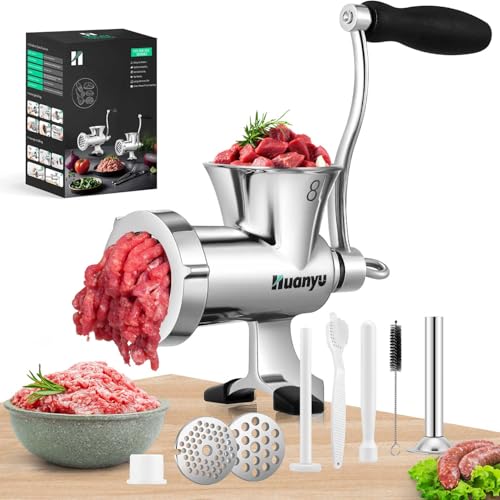
This is the manual grinder I’d recommend to most people. The Huanyu is a heavy-duty, one-piece casting of food-safe 304 stainless steel that resists rust and stands up to years of grinding, which is exactly the durability you want in a hand-crank tool. Its engineered sharp cross blade grips the meat securely with no slippage and cuts cleanly for maximum output, so you’re not fighting the crank. It even includes a sausage attachment for making your own links. The solid build and clean-cutting blade are the whole point. Between the tough construction, the efficient blade, and the sausage tube, I think it’s the clear starting point.
Pros:
– Heavy-duty one-piece 304 stainless casting
– Sharp cross blade grips without slipping
– High, clean grinding output
– Includes a sausage attachment
– Rust-resistant and easy to clean
Cons:
– Priciest on the list
– Heavier to store
2. CAM2 304 Stainless Steel Heavy-Duty Grinder

For a classic heavy-duty grinder, the CAM2 is my pick. It’s a #10-size 304 stainless steel grinder built for real work, with a wide-opening clamp that mounts on almost any countertop or table so it stays rock-solid while you crank. Thoughtful damage-preventing rubber pads protect your work surface, and replacement accessories are available if parts ever wear or go missing. The traditional #10 format is the size home butchers have trusted for generations. It sits at a mid price. If you want a proven, no-nonsense heavy-duty manual grinder that clamps down tight, this is the one I’d choose.
Pros:
– Heavy-duty #10 stainless build
– Wide clamp fits most counters
– Rubber pads protect surfaces
– Replacement parts available
– Proven traditional format
Cons:
– Fewer extras than the Huanyu
– Basic single grinding plate
3. VEVOR Manual Meat Grinder (304 Stainless)
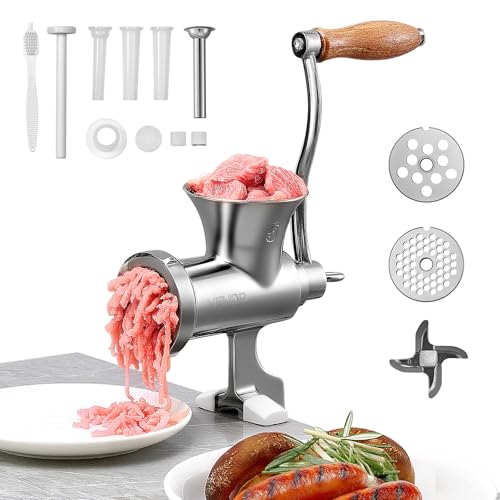
The VEVOR 304 stainless model is my value pick, and it’s the most versatile grinder here. Made from premium rust-resistant 304 stainless steel, it grinds far more than just beef: it handles pork, chicken, fish, small bones, vegetables, and even chili peppers, making it a genuine all-round kitchen tool. It costs less than the top picks while covering a wide range of foods. That flexibility, plus the durable stainless build, makes it a smart everyday choice. If you want a manual grinder that tackles everything from burger meat to homemade chili paste without spending much, this is the one I’d point you to.
Pros:
– Versatile: meat, fish, bones, veggies, chili
– Rust-resistant 304 stainless steel
– Lower price than the top picks
– Durable everyday build
– Good all-round kitchen tool
Cons:
– Fewer premium extras
– Lesser-known brand
4. VEVOR Manual Grinder with 2 Grinding Plates
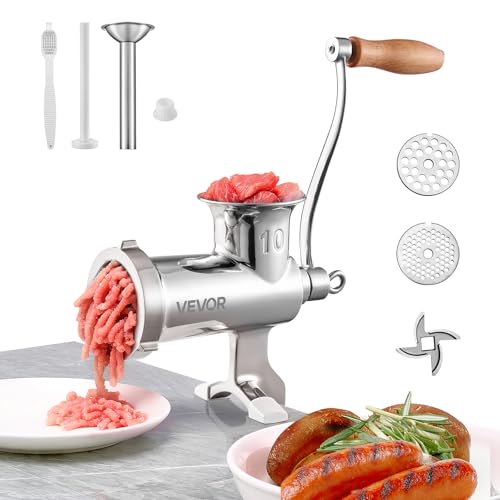
If you want a choice of grind textures, the VEVOR with two grinding plates is my pick. All parts are made of food-grade stainless steel for safe, easy-clean grinding, and the two grinding plates let you switch between coarse and fine, so you can make chunky chili grind or fine sausage meat from the same machine. A strong tabletop clamp with a 1.8-inch opening width fixes it firmly to your counter for stable cranking. It sits at a mid price between the value and premium options. If you like control over your grind and a secure clamp, this is the manual grinder I’d choose.
Pros:
– Two plates for coarse and fine grinds
– Food-grade stainless steel throughout
– Strong 1.8-inch tabletop clamp
– Stable, secure cranking
– Good mid-range value
Cons:
– No sausage attachment noted
– Lesser-known brand
5. LHS Manual Meat Grinder
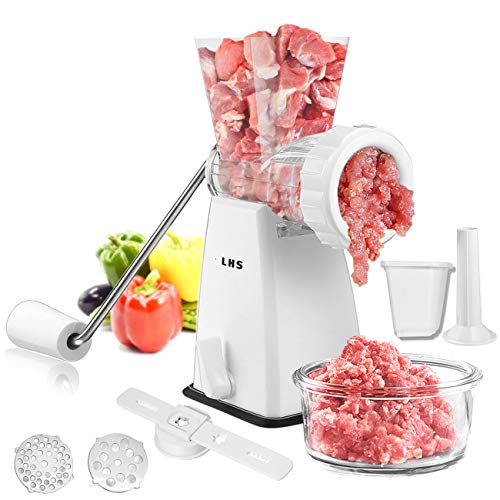
The LHS rounds out the list as the budget champion. It keeps things simple: place your pieces of meat into the grinder and turn the hand crank, no electricity needed, making it about as fuss-free as grinding gets. A heavy-duty plastic body paired with stainless steel blades keeps it durable while grinding quickly, and the low weight makes it easy to store. At well under half the price of the stainless models, it’s an easy way to try grinding your own meat. If you want a cheap, straightforward grinder to see whether home grinding is for you, this is where I’d start.
Pros:
– Lowest price by far
– Simple hand-crank operation
– Stainless steel blades
– Lightweight and easy to store
– Great low-risk starter
Cons:
– Plastic body, not full stainless
– Less heavy-duty than metal grinders
Which Manual Meat Grinder Should You Buy?
| If you… | Then choose |
|---|---|
| Want the best all-around grinder | Huanyu (#1) |
| Want a classic heavy-duty #10 | CAM2 (#2) |
| Want the most versatile value | VEVOR 304 Stainless (#3) |
| Want coarse and fine grind plates | VEVOR 2-Plate (#4) |
| Want the cheapest starter | LHS (#5) |
For most people I’d start with the Huanyu at #1: a one-piece 304 stainless casting, a clean-cutting blade, and a sausage attachment make it the durable all-rounder. Want a classic #10, more grind options, or the lowest price? The CAM2, VEVOR 2-plate, and LHS cover those. Whatever you pick, chill the meat and grinder parts before grinding for the cleanest cut. For more, see our best meat grinders and best sausage stuffer guides.
Sorting out the rest of your setup? Our best meat claws guide covers that next.
Frequently Asked Questions
Is a manual or electric meat grinder better?
It depends on your needs. Manual grinders are cheaper, need no electricity, have almost nothing to break, and give you control, which is great for occasional grinding. Electric grinders are faster and easier for large batches. For a few pounds of burger meat now and then, a manual grinder is plenty.
What can you grind in a manual meat grinder?
Beyond beef and pork, many manual grinders handle chicken, fish, vegetables, chili peppers, and even small bones, like the VEVOR 304 model here. Always check what a specific grinder is rated for, and cut meat into strips that fit the throat before cranking for the smoothest grind.
How do you clean a manual meat grinder?
Disassemble it right after use, wash the parts in hot soapy water, and dry them thoroughly to prevent rust, especially on carbon steel parts. Food-safe 304 stainless steel grinders are the easiest to clean and most rust-resistant. Running a piece of bread through at the end helps push out leftover meat.
Why grind your own meat?
Grinding your own meat lets you control exactly what goes in, the cut, the fat ratio, and freshness, with no fillers or mystery trimmings. Freshly ground beef makes noticeably better burgers, and you can grind specialty blends. It’s also more economical if you buy whole cuts on sale.
Last updated: August 16, 2026. Product availability re-checked.
This page contains affiliate links. As an Amazon Associate we earn from qualifying purchases, at no extra cost to you.