
Best Prosumer Espresso Machine: 6 Ranked for 2026
The best prosumer espresso machine for most people is a well-built semi-automatic with a commercial-style portafilter, a real steam wand, and stable temperature control, because prosumer means exactly that: consumer price, professional-level control over the shot. I’ve pulled shots on cheap pod machines and on serious semi-autos, and the jump in quality comes from the machine giving you command of grind, dose, pressure, and steam rather than hiding it. Prosumer machines let you dial in espresso the way a café does, then froth milk with enough power for real microfoam. We ranked six prosumer espresso machines on build, boiler and portafilter, steam performance, ease of use, and value. Here’s the one to buy.
What to Look for in the Best Prosumer Espresso Machine
Five things separate a true prosumer machine from a countertop pod maker:
- Portafilter size. A 54mm or 58mm commercial-style portafilter holds a proper dose and mirrors café gear, so your technique and accessories carry over. Tiny pressurized baskets limit how good the shot can get.
- Boiler and temperature control. A brass boiler or fast-heating system with steady temperature gives consistent extractions. PID or precise thermostats keep the water in the right window shot after shot.
- Steam wand. A powerful, articulating steam wand is what turns cold milk into silky microfoam for lattes and cappuccinos. It’s the feature that separates good machines from great ones.
- Grinder. Espresso lives or dies on the grind. Some machines build one in; others expect a dedicated grinder. Either way, see our best coffee grinders guide before you buy.
- Build quality. Solid steel housing and commercial components mean the machine lasts for years of daily use rather than months.
Our best milk steamer guide pairs well with this one if you are buying both.
1. Breville Barista Pro
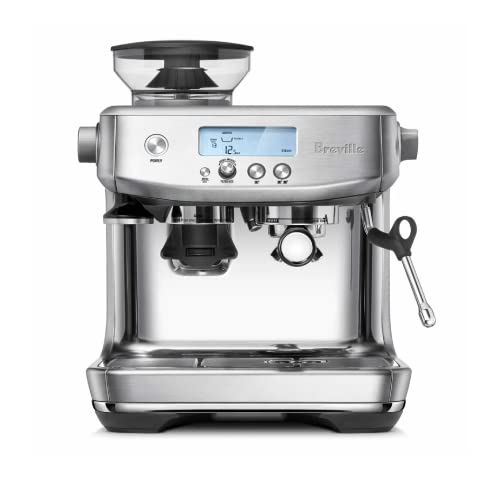
This is the machine I’d recommend to most people stepping up to prosumer espresso. The Breville Barista Pro is a true all-in-one: it has an integrated conical burr grinder, a fast-heating system that’s ready in seconds rather than minutes, and precise digital temperature control for consistent shots. You still grind, dose, tamp, and steam yourself with the manual microfoam wand, so you get real hands-on control without buying a separate grinder. It ships with single and dual-wall baskets, a razor dosing tool, a milk jug, and cleaning gear. Between the built-in grinder, the quick heat-up, and the price, I think it’s the clear starting point.
Pros:
– All-in-one with integrated burr grinder
– Fast-heating system ready in seconds
– Precise digital temperature control
– Manual microfoam steam wand for real latte art
– Complete accessory kit included
Cons:
– 54mm portafilter is smaller than 58mm commercial
– Built-in grinder isn’t as good as a top standalone
2. Gaggia Classic Pro

The Gaggia Classic Pro is the enthusiast’s favorite, and it’s my pick for anyone who wants a traditional machine to grow into. It has solid steel housing, is made in Italy, and pulls 9-bar extractions through a stainless steel 58mm commercial portafilter, the same size cafés use. A commercial three-way solenoid valve and commercial steam wand give it genuine barista credentials, and the simple design is famous for being easy to maintain and modify. It expects a separate grinder, which is exactly what serious drinkers want. If you value classic, no-nonsense espresso and a machine that lasts for years, this is a superb buy.
Pros:
– 58mm commercial-size portafilter
– Solid steel housing, made in Italy
– Commercial three-way solenoid valve
– Commercial steam wand for strong steaming
– Easy to maintain and endlessly upgradeable
Cons:
– No built-in grinder
– Single boiler means waiting between brew and steam
3. Rancilio Silvia M V6

For the most commercial-grade single-boiler machine here, the Rancilio Silvia is my pick. The Silvia has been in production for over 20 years, which makes it one of the most stable and proven espresso platforms you can buy. It uses a single 12-ounce brass boiler that serves both brew and steam, professional components built with the same care as Rancilio’s commercial lineup, and a dedicated group solenoid that purges pressure and allows backflushing. The steel case is sturdy yet compact enough for a small counter. It costs more than the Gaggia and demands good technique, but it rewards you with café-quality shots for years.
Pros:
– Proven, 20-plus-year commercial-grade design
– 12-ounce brass boiler for strong steam
– Professional Rancilio components
– Group solenoid enables backflushing
– Compact steel case fits small spaces
Cons:
– Higher price than the Gaggia
– Single boiler and no grinder
4. Breville Barista Touch

If you want prosumer results with a guided, modern experience, the Breville Barista Touch is my pick. It pairs an integrated grinder and fast heating with a color touchscreen that walks you through café drinks step by step, and its temperature-sensing steam wand can texture milk automatically to your chosen temperature and froth level. That takes the hardest part, milk steaming, and makes it repeatable for beginners while still allowing manual control. It comes with a full stainless portafilter, baskets, a milk jug, and a water filter. For a household where not everyone is a barista, the touchscreen guidance is genuinely worth it.
Pros:
– Color touchscreen with guided drink recipes
– Integrated grinder and fast heat-up
– Automatic milk texturing to set temp and froth
– Great for beginners and shared kitchens
– Complete accessory kit included
Cons:
– Pricier than the Barista Pro
– Automation appeals less to purists
5. Fellow Espresso Series 1

The Fellow Espresso Series 1 is the high-end pick for someone who wants the latest control features and beautiful design. It offers pressure profiling and controlled flow to improve sweetness, clarity, and balance, plus built-in shot feedback that detects pours running too fast or slow and suggests grind adjustments. On-screen guidance and step-by-step recipes make it beginner-friendly, while it heats in under two minutes rather than the 15-plus a traditional machine needs. It uses a 58mm bottomless portafilter and includes a generous accessory kit and a two-year warranty. It’s the priciest machine here, and for a tech-forward enthusiast it earns the spend.
Pros:
– Pressure profiling and controlled flow
– Built-in shot feedback and grind suggestions
– 58mm bottomless portafilter
– Heats in under two minutes
– Beautiful design with a 2-year warranty
Cons:
– Most expensive machine on the list
– No built-in grinder
6. Gaggia Classic Evo Pro

The Gaggia Classic Evo Pro is the best value entry into prosumer espresso, and it’s the newest take on the Classic line. It upgrades the brass boiler for increased capacity and power, keeps the solid steel housing and a brass group head with a stainless surround, and pulls the same 9-bar extractions with a three-way solenoid valve. A commercial steam wand handles milk properly. It’s made in Italy from machine-grade components, so you get real durability at the lowest price on this list. If you want to start pulling genuine espresso shots without spending big, and you already have or will buy a grinder, this is where I’d begin.
Pros:
– Lowest price on the list
– Upgraded brass boiler with more power
– Solid steel housing, brass group head
– 9-bar extractions with 3-way solenoid
– Commercial steam wand, made in Italy
Cons:
– No built-in grinder
– Single boiler waits between brew and steam
Which Prosumer Espresso Machine Should You Buy?
| If you… | Then choose |
|---|---|
| Want the best all-in-one | Breville Barista Pro (#1) |
| Want a classic machine to grow into | Gaggia Classic Pro (#2) |
| Want commercial-grade single boiler | Rancilio Silvia M V6 (#3) |
| Want guided, touchscreen ease | Breville Barista Touch (#4) |
| Want the latest brewing tech | Fellow Espresso Series 1 (#5) |
| Want the best value entry | Gaggia Classic Evo Pro (#6) |
For most people I’d start with the Breville Barista Pro at #1: a built-in grinder, fast heat-up, and precise temperature control give you café-style shots without buying a separate grinder. Go traditional with a Gaggia Classic Pro or Rancilio Silvia if you want a machine to master over years, or the Fellow if you want the latest tech. Whatever you choose, pair it with a good grinder from our best coffee grinders guide and see our best at-home espresso roundup for more options.
I would pair this with the choices in our best espresso grinder under $500 guide.
Frequently Asked Questions
What does prosumer espresso machine actually mean?
Prosumer blends professional and consumer. A prosumer espresso machine costs less than a full commercial unit but gives you café-level control over grind, dose, pressure, and steam, with commercial-style portafilters and steam wands. It sits above pod and basic pump machines but below true commercial gear.
Do prosumer espresso machines come with a grinder?
Some do and some don’t. All-in-one machines like the Breville Barista Pro and Touch have integrated burr grinders. Traditional machines like the Gaggia Classic Pro and Rancilio Silvia expect you to buy a dedicated grinder, which enthusiasts prefer because a good standalone grinder outperforms most built-in ones.
Is a 58mm portafilter better than 54mm?
A 58mm portafilter is the commercial standard, so accessories and technique transfer directly from café equipment, and it holds a larger dose. A 54mm portafilter, used in Breville machines, still makes excellent espresso and takes up a bit less space. Both can pull great shots.
Are prosumer espresso machines worth it?
If you drink espresso daily and care about quality, yes. A prosumer machine pays for itself over time versus café visits and delivers noticeably better, more consistent drinks than pod machines. If you only want the occasional coffee, a simpler machine is a better fit.
Last updated: August 16, 2026. Product availability re-checked.
This page contains affiliate links. As an Amazon Associate we earn from qualifying purchases, at no extra cost to you.