
Best Sulfur Filter for Well Water: 5 Ranked for 2026
The best sulfur filter for well water gets rid of the rotten-egg smell of hydrogen sulfide (H2S) that makes your water and home unpleasant, and the good ones tackle the iron and manganese staining that usually come with it. When our well started smelling like sulfur every morning, an air-injection filter cleared the odor from every faucet within a day. The choice comes down to a few things: the removal method (an air-injection oxidizing system is the go-to for H2S, iron, and manganese, while cartridge filters handle sediment and lighter odor), the flow rate for your household size, whether it runs chemical-free with auto-flush, and the level of contaminants in your water. We ranked five sulfur filters for well water on removal, flow, and value. Here’s the one to buy. Test your well water first; a sulfur filter targets odor, taste, and staining, not bacteria or contamination, which need separate treatment.
What to Look for in the Best Sulfur Filter for Well Water
Four things separate a great sulfur filter from an underwhelming one:
- Removal method. Air-injection oxidizing systems are the standard for removing hydrogen sulfide, iron, and manganese whole-house, by oxidizing them and washing them down the drain. Carbon and multi-stage cartridges handle sediment and lighter odor but aren’t full sulfur solutions.
- Flow rate and home size. Match the system to your household: bigger tanks and higher flow suit larger homes with more bathrooms so pressure stays strong.
- Chemical-free and auto-flush. The best whole-house systems regenerate with air, no chemicals to buy, and auto-flush on a digital schedule for set-and-forget operation.
- Contaminant levels. Get your water tested for H2S, iron, and manganese in ppm, then choose a system rated to handle those levels. Pair the system with our best shower filter for well water for the bathroom.
1. DuraWater Air Injection Iron Eater Filter
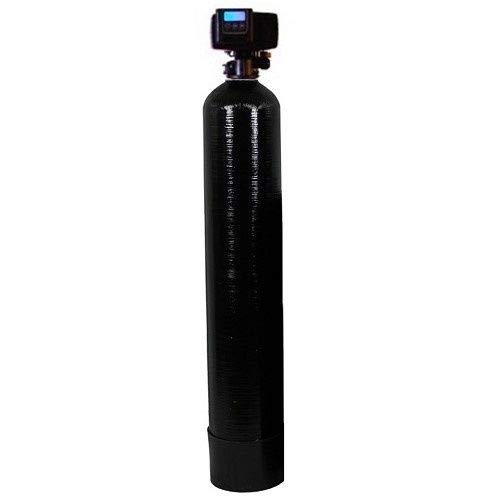
This is the sulfur filter for well water I’d recommend to most people. The DuraWater Air Injection Iron Eater is a digital air-injection system designed for comprehensive removal of iron, manganese, and hydrogen sulfide, the sulfur smell, from your whole home. Its air-injection technology creates a pocket of air that oxidizes the water for optimal filtration, then washes the oxidized contaminants down the drain, all without chemicals. It’s a complete system package: 1.0 cubic foot of filter media, a 10-by-54-inch mineral tank, and a bypass valve. That chemical-free air-injection removal of sulfur, iron, and manganese in a complete whole-house package at a fair price is what makes it the safe default. It sits at a fair price for a whole-house system. For clearing the rotten-egg smell and iron staining at every faucet, I think it’s the clear starting point.
Pros:
– Removes H2S, iron, and manganese
– Chemical-free air injection
– Digital control head
– Complete system with tank
– Whole-house coverage
Cons:
– Professional install recommended
– Larger upfront investment
2. AIO Air Injection Oxidizing Well Water Filter

For larger homes, the AIO Air Injection system is my pick. It’s built for high flow in larger homes with four or more people and three or more bathrooms, so water pressure holds up across a busy household. Its removal capacity is strong: it removes iron up to 27 ppm, plus hydrogen sulfide and manganese, and it handles general filtering too. The filter media in the 12-by-52-inch tank traps the oxidized iron and sulfur until it’s washed down the drain during the regeneration cycle. That high-flow, high-capacity air-injection removal for bigger homes is the draw for anyone with heavy contamination or a large household. It sits at a fair mid-to-high price. If you have a big home or high iron and sulfur levels, this is the one I’d choose. The high flow keeps pressure strong even in a three-bathroom home.
Pros:
– High flow for larger homes
– Removes iron up to 27 ppm
– Removes H2S and manganese
– Large 12×52 tank
– Air-injection regeneration
Cons:
– Bigger footprint
– Professional install recommended
3. iSpring WCFM500K Whole House Filtration System

For a premium set-and-forget system, the iSpring WCFM500K is my pick. It delivers clean water from every faucet, reducing iron, manganese, and hydrogen sulfide whole-house, and its standout is convenience: a set-and-forget digital control with an LED screen lets you set personalized auto-flush intervals. It uses no chemicals, regenerating on its own, from iSpring, a trusted name in home water filtration. That premium whole-house removal with digital auto-flush and chemical-free operation from a trusted brand is the draw for anyone who wants a hands-off, high-end system. It’s the priciest option here, and the automation and brand earn it. If you want the most convenient, premium system, this is the one I’d choose. The digital auto-flush means you rarely touch it once it’s set.
Pros:
– Reduces iron, manganese, H2S
– Set-and-forget digital auto-flush
– Chemical-free regeneration
– Trusted iSpring brand
– Whole-house coverage
Cons:
– Most expensive on the list
– Professional install recommended
4. iFilters Multi-Stage Well Water Filtration System

For a cartridge-based value system, the iFilters multi-stage is my pick. It’s built specifically for well-water problems: sediment, rust, iron staining, and sulfur odor. Its first stage is a washable anti-bacterial pleated pre-filter that provides a large filtration area (and can be rinsed and reused), and the second cartridge combines granular activated carbon (GAC) and KDF media to reduce odor and metals. That well-water-focused multi-stage cartridge design at a much lower price than a full oxidizing system is the draw for lighter sulfur and sediment issues or as a supplement. It sits at a fair mid price. If your sulfur is mild and you want an affordable cartridge system, this is the one I’d choose. The washable pleated pre-filter saves on replacement costs over time.
Pros:
– Built for well-water problems
– Washable pleated pre-filter
– GAC and KDF media
– Reduces sediment, odor, metals
– Affordable cartridge system
Cons:
– Cartridges need periodic replacement
– Best for lighter sulfur levels
5. ICEPURE 1-Micron Carbon Whole House Filters (4-Pack)
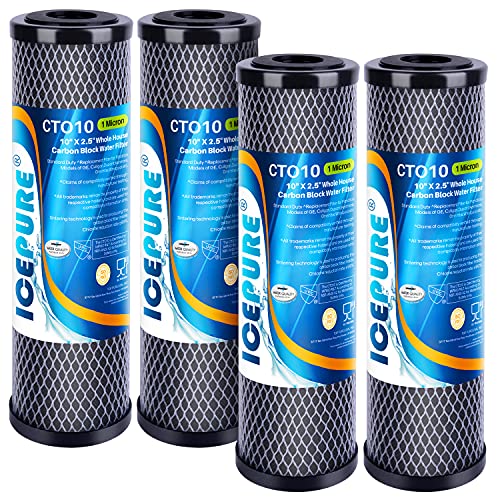
The ICEPURE rounds out the list as the budget carbon-cartridge pick. This 4-pack of 1-micron CTO carbon filters is NSF/ANSI 42 certified, so it effectively reduces chlorine, taste, and odor, and the carbon media helps polish out mild sulfur smell and other odors. The filters meet international material regulations and fit any standard 10-inch by 2.5-inch whole-house or RO housing, so they slot into an existing setup. At the lowest price here, it’s an inexpensive way to reduce odor as a polishing stage. That NSF-certified carbon odor reduction in a value 4-pack at the lowest price is the appeal for mild odor or as a final stage. It’s the cheapest option on the list. If your sulfur is faint or you want a cheap odor-polishing cartridge, this is the one I’d choose. As a final carbon stage it noticeably improves taste and smell.
Pros:
– NSF/ANSI 42 certified
– Reduces chlorine, taste, odor
– Fits standard 10×2.5 housings
– Value 4-pack
– Cheapest on the list
Cons:
– Not a full sulfur-removal system
– Cartridges need regular replacement
Which Sulfur Filter for Well Water Should You Buy?
| If you… | Then choose |
|---|---|
| Want the best all-around system | DuraWater Air Injection (#1) |
| Have a large home or high levels | AIO Air Injection (#2) |
| Want premium set-and-forget | iSpring WCFM500K (#3) |
| Want an affordable cartridge system | iFilters Multi-Stage (#4) |
| Have mild odor or want a polish stage | ICEPURE Carbon (#5) |
For most homes with a real sulfur smell I’d start with the DuraWater Air Injection at #1: chemical-free oxidizing removal of hydrogen sulfide, iron, and manganese in a complete whole-house system at a fair price. Have a large home, want premium automation, or only need a cartridge? The AIO, iSpring, and iFilters cover those. Whichever you pick, test your water for H2S, iron, and manganese levels first, match the system to your household size, and remember a sulfur filter addresses odor, taste, and staining, not bacteria or contamination. For the rest of the system, see our best well pressure tank and best shower filter for well water guides.
On a related note, our best hot water recirculating pump guide is worth a look.
Frequently Asked Questions
Why does my well water smell like rotten eggs?
That rotten-egg smell is hydrogen sulfide gas (H2S), often produced by sulfur bacteria or naturally occurring in some wells, and it’s frequently accompanied by iron and manganese. It’s usually a nuisance issue affecting taste, odor, and staining rather than a direct health hazard at typical levels, but high levels or bacterial sources should be tested. An air-injection oxidizing filter is the common whole-house fix.
How do you remove sulfur from well water?
The most effective whole-house method is an air-injection oxidizing filter, which injects air to oxidize the hydrogen sulfide (and iron and manganese) into particles the media traps and then flushes down the drain, chemical-free. Carbon and multi-stage cartridges help with mild odor and sediment but generally can’t remove heavy sulfur on their own. Match the system to your tested contaminant levels.
Do I need to test my well water before buying a sulfur filter?
Yes, testing is important. A water test tells you the levels of hydrogen sulfide, iron, manganese, and pH, which determine which system and capacity you need and whether bacteria are the source. Buying blind can leave you with an undersized or wrong system. Many labs and county extension offices offer well-water testing, and knowing your numbers ensures you pick a filter rated for your water.
How often do sulfur filters need maintenance?
Air-injection oxidizing systems are largely automatic, regenerating and back-flushing on a set schedule, with media typically lasting several years before replacement, and no chemicals to add on chemical-free models. Cartridge-based systems need their filters replaced periodically, from every few months to a year depending on water quality and usage. Follow the manufacturer’s schedule and keep an eye on flow and odor as signs it’s time to service.
Last updated: August 18, 2026. Product availability re-checked.
This page contains affiliate links. As an Amazon Associate we earn from qualifying purchases, at no extra cost to you.